

Introduction
If you’ve ever opened a closet full of clothes and still felt like you had nothing to wear, you’re not alone. Many people buy clothing regularly but struggle to create outfits that feel stylish, practical, and comfortable. That’s where a Capsule Wardrobe Guide for Beginners becomes incredibly helpful.
A capsule wardrobe focuses on quality instead of quantity. Rather than filling your closet with trendy pieces that quickly go out of style, you create a collection of versatile clothing items that mix and match effortlessly. This approach helps you save time, reduce unnecessary spending, and build confidence in your everyday style.
Whether you’re a student, working professional, stay-at-home parent, or someone looking to simplify life, a capsule wardrobe can work for you. It doesn’t require expensive designer clothing or a complete wardrobe makeover. Instead, it encourages thoughtful shopping and smarter outfit planning.
In this Capsule Wardrobe Guide for Beginners, you’ll learn exactly how to create a wardrobe that suits your lifestyle, budget, and personality. We’ll cover the essentials, explain common mistakes, discuss the benefits and drawbacks, answer frequently asked questions, and provide expert tips to help you build a wardrobe you’ll love wearing every day.
What is a Capsule Wardrobe?
A capsule wardrobe is a carefully selected collection of essential clothing pieces that can be mixed and matched to create many different outfits. The goal is to own fewer but better-quality clothes that work together.
Instead of having hundreds of clothing items, a capsule wardrobe usually includes timeless basics that remain fashionable for years.
Typical capsule wardrobe items include:
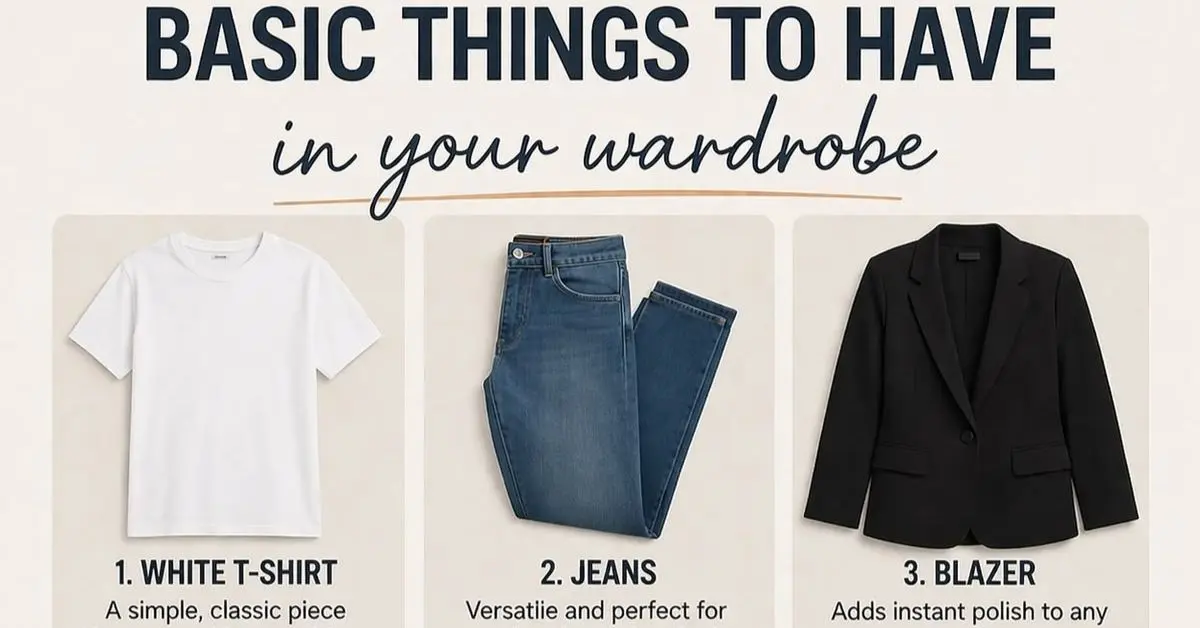
- Plain T-shirts
- Button-up shirts
- Jeans
- Trousers
- Blazers
- Sweaters
- Jackets
- Comfortable shoes
- Neutral dresses
- Basic accessories
The exact number of items isn’t fixed. Some people prefer 30 pieces, while others maintain around 50. The key is functionality rather than numbers.
A capsule wardrobe also reflects your personal lifestyle. For example, someone working in an office will need different essentials than someone working remotely.
Why is a Capsule Wardrobe Guide for Beginners Important?
Building a wardrobe intentionally offers much more than fashion benefits.
Saves Time
Getting dressed becomes faster because every item works well with the others.
Reduces Decision Fatigue
Fewer clothing choices make mornings less stressful.
Saves Money
You stop buying unnecessary clothes and focus on high-quality essentials.
Reduces Clutter
A cleaner closet creates a calmer environment.
Encourages Sustainable Fashion
Buying fewer clothes reduces waste and supports environmentally friendly shopping habits.
Improves Personal Style
Rather than chasing trends, you develop a consistent style that reflects your personality.
Detailed Step-by-Step Guide
Step 1: Empty Your Closet
Start by removing everything from your wardrobe.
Lay all your clothes on your bed or floor and evaluate each item honestly.
Ask yourself:
- Have I worn this recently?
- Does it fit properly?
- Is it comfortable?
- Does it match other clothes I own?
- Would I buy it again today?
Separate clothing into:
- Keep
- Donate
- Sell
- Recycle
- Store seasonally
This step gives you a fresh start.
Step 2: Identify Your Lifestyle
Your wardrobe should support your daily routine.
Think about where you spend most of your time.
Examples include:
- Office work
- College
- Casual outings
- Exercise
- Formal events
- Working from home
- Travel
If you spend most days in casual clothes, there’s no reason to own numerous formal suits.
Step 3: Choose a Color Palette
A consistent color palette makes outfit planning much easier.
Neutral Colors
- Black
- White
- Gray
- Navy
- Beige
- Brown
Accent Colors
Add two or three colors you genuinely enjoy wearing.
Examples include:
- Olive
- Burgundy
- Rust
- Sky Blue
- Forest Green
Choosing compatible colors increases outfit combinations dramatically.
Step 4: Build Your Essential Clothing Collection
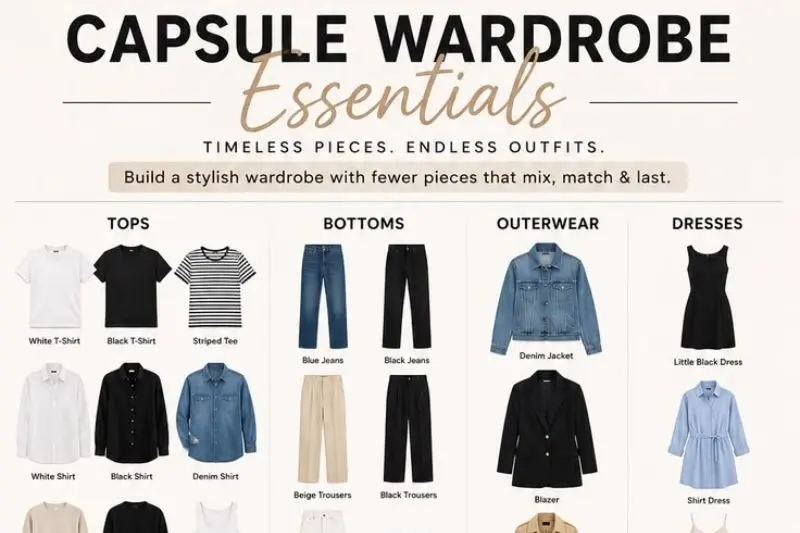
Here is a basic beginner checklist.
Tops
- White T-shirt
- Black T-shirt
- Neutral polo
- Button-down shirt
- Lightweight sweater
Bottoms
- Blue jeans
- Black jeans
- Chinos
- Tailored trousers
Outerwear
- Denim jacket
- Blazer
- Winter coat
- Casual jacket
Shoes
- White sneakers
- Formal shoes
- Boots
- Sandals
Accessories
- Belt
- Watch
- Sunglasses
- Simple jewelry
- Neutral handbag or backpack
Step 5: Prioritize Quality Over Quantity
Instead of buying five inexpensive shirts, consider investing in one durable, well-made shirt.
Quality clothing typically:
- Lasts longer
- Fits better
- Maintains its shape
- Looks more polished
- Saves money over time
Check:
- Fabric quality
- Stitching
- Comfort
- Washing instructions
Step 6: Mix and Match Your Outfits
The beauty of a capsule wardrobe lies in versatility.
For example:
White T-shirt +
- Blue jeans
- Black trousers
- Chinos
- Shorts
- Blazer
- Denim jacket
One shirt can create several different looks.
Aim for clothing pieces that coordinate naturally.
Step 7: Shop with Purpose
Avoid impulse shopping.
Before buying anything, ask:
- Does this match at least three outfits?
- Do I already own something similar?
- Will I wear it regularly?
- Is it comfortable?
- Is it suitable for my lifestyle?
Waiting 24 hours before purchasing can prevent unnecessary spending.
Step 8: Organize Your Wardrobe
Arrange clothes neatly.
You can organize by:
- Category
- Color
- Season
- Frequency of use
A well-organized closet encourages better outfit planning.
Step 9: Review Every Season
Your clothing needs change throughout the year.
At the beginning of each season:
- Remove damaged clothing.
- Store seasonal items.
- Replace worn essentials.
- Evaluate your wardrobe needs.
This keeps your collection fresh without becoming cluttered.
Step 10: Stay True to Your Personal Style
Fashion trends come and go.
Instead of following every trend, choose clothes that:
- Fit well
- Feel comfortable
- Reflect your personality
- Suit your daily activities
Confidence is always more stylish than trends.
Benefits of Capsule Wardrobe Guide for Beginners
A capsule wardrobe offers many practical advantages.
- Saves money on unnecessary purchases.
- Makes getting dressed easier.
- Creates a cleaner closet.
- Reduces shopping stress.
- Encourages mindful buying.
- Improves outfit coordination.
- Supports sustainable fashion.
- Reduces laundry loads.
- Helps define personal style.
- Makes travel packing easier.
- Requires less storage space.
- Increases clothing longevity.
- Minimizes fashion waste.
- Simplifies seasonal transitions.
- Builds confidence through consistency.
Disadvantages / Risks
Although beneficial, there are a few challenges.
- Initial wardrobe planning takes time.
- Quality clothing often costs more upfront.
- Seasonal weather may require additional items.
- Fashion lovers may miss shopping frequently.
- Finding the perfect basics can take patience.
- Lifestyle changes may require wardrobe updates.
- Limited variety may feel repetitive if planned poorly.
- Poor-quality basics wear out quickly.
Fortunately, thoughtful planning minimizes these drawbacks.
Common Mistakes to Avoid
Many beginners make avoidable mistakes while building a capsule wardrobe.
Buying Too Many Basics
Basics are essential, but duplicates create clutter.
Ignoring Personal Lifestyle
Never copy someone else’s wardrobe completely.
Build one that suits your daily routine.
Choosing the Wrong Size
Even expensive clothing looks poor if it doesn’t fit correctly.
Tailoring often makes a huge difference.
Buying Cheap Instead of Quality
Low-cost clothing often wears out quickly.
Invest in durable essentials whenever possible.
Following Every Trend
Trendy clothing usually has a short lifespan.
Classic styles remain useful for years.
Keeping Clothes Out of Guilt
If you never wear something, donate or sell it.
Unused clothing only occupies space.
Forgetting Seasonal Needs
Prepare clothing for summer, winter, rainy seasons, and special occasions.
Shopping Without a List
Always know what your wardrobe actually needs before shopping.
FAQs
1. How many clothes should a beginner have in a capsule wardrobe?
There is no fixed number. Most beginners start with 30–50 versatile clothing items, excluding workout wear, sleepwear, and undergarments. Focus on quality and functionality rather than hitting an exact count.
2. Can a capsule wardrobe still be fashionable?
Absolutely.
A capsule wardrobe emphasizes timeless style rather than short-lived trends. Accessories, layering, and color combinations can create many fashionable looks
3. Is a capsule wardrobe only for minimalists?
Anyone can benefit from owning clothes that work together efficiently, regardless of personal style.
4. How often should I buy new clothes?
Only replace worn-out items or purchase clothing that fills an actual gap in your wardrobe.
Avoid shopping simply because something is on sale.
5. Can I include trendy clothing?
A few trendy pieces can add personality, but they should complement your timeless essentials instead of replacing them.
6. Does a capsule wardrobe save money?
Although quality clothing may cost more initially, buying fewer items reduces long-term spending and eliminates many impulse purchases.
Expert Tips & Bonus Points
- Start with what you already own before buying anything new.
- Take photos of successful outfits for future inspiration.
- Invest in well-fitting jeans and comfortable shoes first.
- Choose wrinkle-resistant fabrics if you travel frequently.
- Rotate seasonal clothing to keep your closet organized.
- Learn basic clothing care to extend garment life.
- Wash clothes according to care labels instead of after every wear when appropriate.
- Buy neutral outerwear because it pairs with almost everything.
- Avoid purchasing clothing without trying it on whenever possible.
- Keep a small wish list on your phone to prevent impulse shopping.
- Tailor important clothing pieces for the best fit.
- Build slowly instead of replacing your entire wardrobe at once.
- Select accessories that complement multiple outfits.
- Review your wardrobe every three to six months.
- Focus on comfort, confidence, and practicality above fashion trends.
Conclusion
Creating a simpler, smarter wardrobe doesn’t mean sacrificing style. In fact, a thoughtfully planned collection of clothing can make getting dressed easier, improve your confidence, and help you make better purchasing decisions. As this Capsule Wardrobe Guide for Beginners has shown, the goal is not to own as few clothes as possible but to own the right clothes for your lifestyle.
Start by evaluating what you already have, identifying your daily clothing needs, and choosing versatile pieces that work well together. Focus on quality instead of quantity, build around a consistent color palette, and resist the temptation to chase every new trend. Over time, you’ll discover that fewer, well-chosen garments can create far more outfit combinations than an overcrowded closet.
Remember that building a capsule wardrobe is a gradual process. You don’t need to replace everything overnight. Make thoughtful purchases, remove items that no longer serve you, and refine your wardrobe season by season. This approach not only saves money and reduces clutter but also promotes a more sustainable way of dressing.
Whether your goal is simplifying your mornings, improving your personal style, or making smarter fashion choices, following this Capsule Wardrobe Guide for Beginners is a practical first step. With patience and consistency, you’ll build a wardrobe that is functional, stylish, and perfectly suited to your everyday life.
